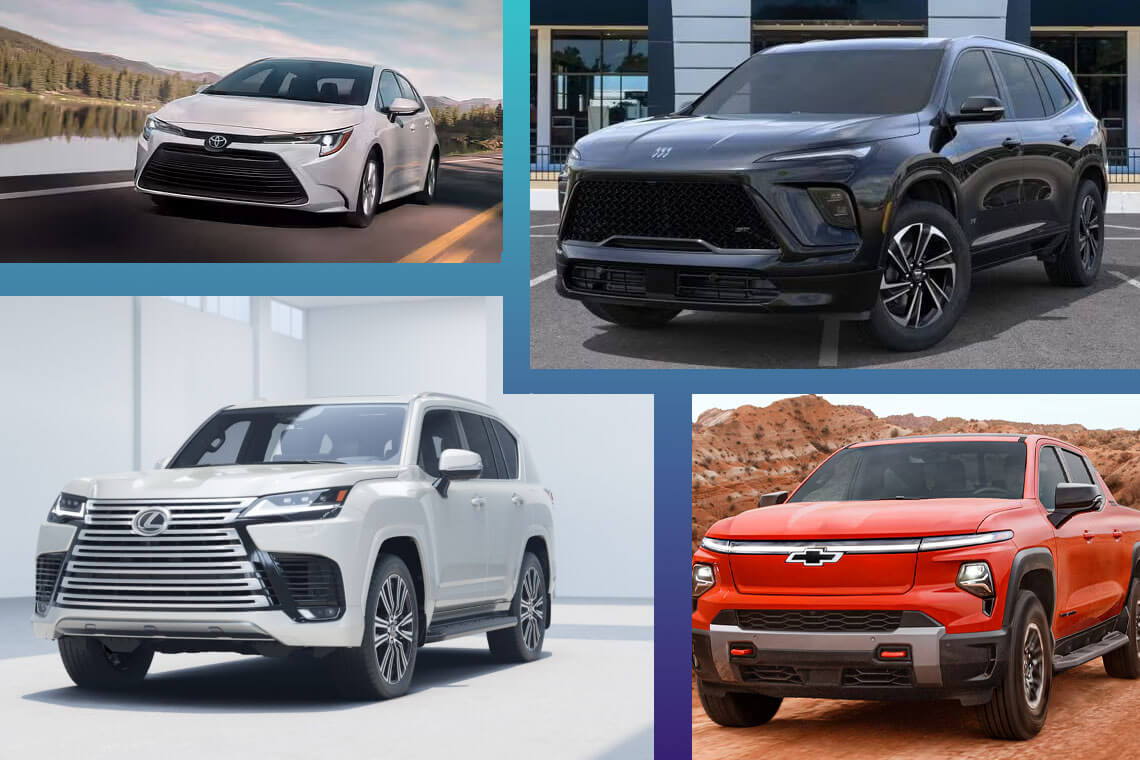
According to the JD Power 2026 U.S. Vehicle Dependability Study (VDS), persistent problems with infotainment systems, spotty performance of over-the-air (OTA) software updates, and issues with vehicle exteriors have driven long-term dependability problems to new highs.
Lexus ranks highest overall in vehicle dependability among premium brands for a fourth consecutive year, with a score of 151 PP100. Cadillac (175 PP100) ranks second and Porsche (182 PP100) ranks third.
Buick ranks highest in the mass market segment for a second consecutive year, with a score of 160 PP100. MINI (168 PP100) ranks second and Chevrolet (178 PP100) ranks third.
Toyota Motor Corporation has the top overall model in the study—Lexus IS—and receives the most model-level awards with eight. Model-level award recipients are Lexus IS, Lexus UX, Lexus GX, Toyota Corolla, Toyota Camry, Toyota Tacoma, Toyota Sienna, and Toyota 4Runner. General Motors Company receives four model-level awards for Buick Enclave, Cadillac XT6, Chevrolet Equinox, and Chevrolet Tahoe.
Compared with 2025 results, vehicle problems after three years of ownership have increased by 2 problems per 100 vehicles (PP100), resulting in an industry average of 204 PP100. A lower score indicates higher vehicle quality.
This year’s results mark the highest-recorded problem count since the VDS was redesigned in 2022, highlighting an ongoing industry-wide trend in which vehicle dependability has degraded during the past three years. Of the nine problem categories that comprise the study, infotainment remains the most problematic (56.7 PP100), followed by exterior (27.5 PP100).
“As owners hold onto their vehicles longer, the long-term ownership experience matters more than ever,” said Jason Norton, director of auto benchmarking at JD Power. “Software updates and new technologies should enhance the ownership experience over time, yet many vehicle owners cite ongoing mobile phone integration problems and little to no benefit after an update is performed. Much of this comes down to owner education and ongoing communication. Automakers should focus on delivering meaningful improvements and clearly communicating the intended benefits of software updates so owners understand how they are designed to enhance their vehicle and ownership experience.”