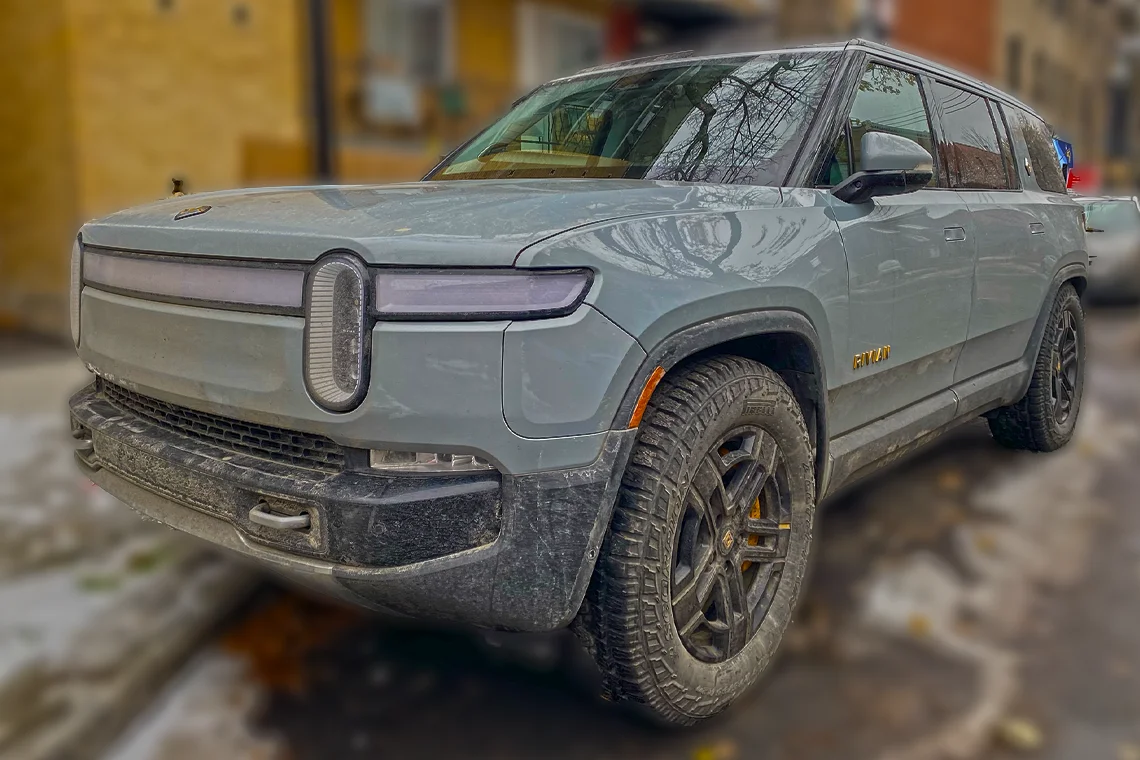
Critical Shifts:
-
Massive Inventory Inflow Pipeline: The deal establishes a roadmap for up to 50,000 Rivian R2 units to enter professional fleet service. For independent dealers, this represents the "first look" at the volume and specifications of the future used EV inventory that will dominate the 2030s secondary market.
-
Vertical Integration as a Value Driver: Unlike traditional OEMs that rely on third-party tech, Rivian is building the vehicle, the silicon (RAP1 chips), and the software stack in-house. This means "certified" software health and battery data will likely be the primary drivers of residual value, replacing traditional mechanical wear as the key appraisal metric.
-
The "Robotaxi" Service Life: These vehicles are designed for high-utilization commercial work. Dealers should prepare for a future market where "low mileage" is rare, and value is instead tied to sensor calibration logs and compute hardware generations.
_______________
SAN FRANCISCO & IRVINE, Calif. — In a move that could redefine fleet vehicle remarketing and the used electric vehicle market, Rivian and Uber have announced a massive $1.25 billion partnership. The deal centers on the deployment of up to 50,000 fully autonomous R2 "robotaxis" by 2031. For the independent auto dealer, this signals a shift in how autonomous vehicle technology will eventually hit the secondary market and underscores the growing dominance of fleet-managed EV inventory.
The Fleet Scale: 10,000 to 50,000 Units
The agreement outlines an initial purchase of 10,000 R2 units, with an option for 40,000 more by 2030. For niche used car publications and dealers, this is a "heads up" on future inventory cycles. These vehicles are expected to hit the ground in 25 cities—including San Francisco and Miami—starting in 2028.
The demand for the tech is already growing at a fast clip. In May 2025, Uber CEO Dara Khosrowshahi stated during the company's Q1 2025 earnings call that the average Waymo vehicle in Austin, Texas, is "busier than 99%" of human-driven vehicles in the city.
As these high-mileage, autonomous-grade vehicles eventually age out of Uber’s service, they will create a new category of "certified autonomous" used inventory that independent shops will need to be prepared to service and sell.
Highlighting the technical momentum behind the deal, RJ Scaringe, Founder and CEO of Rivian, stated: “We couldn’t be more excited about this partnership with Uber — it will help accelerate our path to level 4 autonomy... The scale of Rivian's growing data flywheel coupled with RAP1... make us incredibly excited for the rapid advancement of Rivian autonomy over the next couple of years.”
Technical Specs: The "RAP1" Powerhouse
Dealers should take note of the hardware under the hood, as these specs will become the "selling points" (or service hurdles) of the 2030s:
-
The Brain: Rivian’s in-house RAP1 chips, capable of 1,600 TOPS of AI compute.
-
The Sensors: 11 cameras (65MP), 5 radars, and 1 LiDAR.
-
The Platform: Built on the R2 consumer architecture launching in late 2026.
Why This Matters for the Independent Dealer
While these "Robotaxis" are exclusive to the Uber platform for now, the partnership is built on a foundation of total hardware and software synergy. Regarding the decision to lean into Rivian's tech stack, Khosrowshahi noted:
“We’re big believers in Rivian’s approach—designing the vehicle, compute platform, and software stack together, while maintaining end-to-end control of scaled manufacturing and supply in the U.S. That vertical integration, combined with data from their growing consumer vehicle base and experience managing the complexities of commercial fleets, gives us conviction to set these ambitious but achievable targets.”
For the independent dealer, this highlights a growing trend: the "Tesla-fication" of the used market where software updates and proprietary sensors define the vehicle's value more than the odometer does.
Looking Ahead
The first wave of these R2 units won't hit the secondary market for several years, but the investment confirms that the industry is betting big on "Physical AI." Dealers who specialize in late-model EVs should begin monitoring Rivian’s "data flywheel" progress, as these milestones will directly impact the residual value of consumer R1 and R2 models currently sitting on independent lots.