Critical Shifts:
-
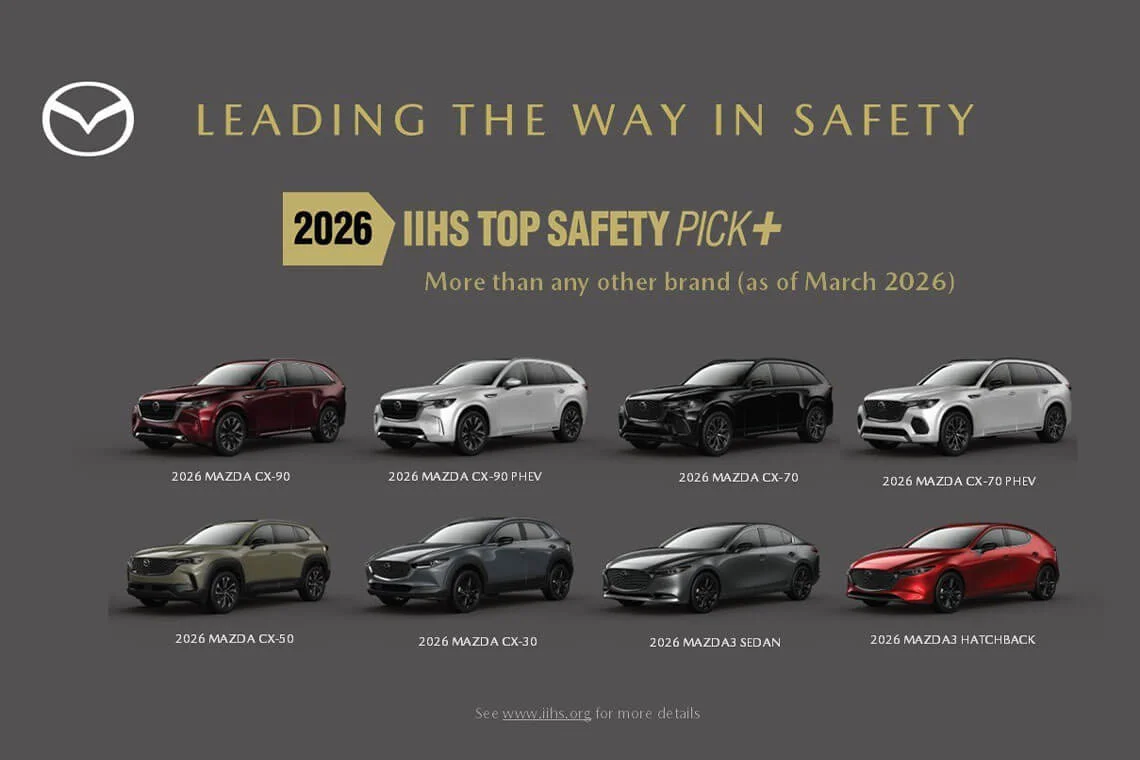
Mazda Dominates the "Plus" Tier: For the third year in a row, Mazda leads the industry with eight TOP SAFETY PICK+ awards—the most of any brand. This is particularly impressive as the IIHS continues to tighten criteria annually.
-
The "Back Seat" Revolution: The 2026 standards have shifted significantly to prioritize rear-passenger protection. A "Good" rating in the updated moderate overlap front test is now mandatory for any award, a hurdle that many minivans and small pickups failed to clear this year.
-
Safety is Becoming More Affordable: High safety ratings are no longer exclusive to luxury brands. More than a dozen TOP SAFETY PICK+ winners start under $30,000, with the Kia K4 ($22,290) and Hyundai Kona ($25,500) highlighted as value leaders.
-
SUV Dominance vs. Minivan Struggles: SUVs accounted for 47 of the 63 total awards. In contrast, no minivans or minicars earned awards this year, leading the IIHS to suggest that safety-conscious parents might prefer affordable sedans or SUVs over traditional family vans.
_________________________________
Mazda vehicles once again rank among the safest on the road, earning eight 2026 TOP SAFETY PICK+ awards from the Insurance Institute for Highway Safety (IIHS), more than any other brand.
This is the third consecutive year Mazda has debuted as the industry leader in the highest tier of IIHS recognition — a remarkable accomplishment considering the criteria continue to tighten each year.
“Mazda continues to excel in safety with eight IIHS TOP SAFETY PICK+ models this year,” said IIHS President David Harkey. “They are providing consumers with the best in safety features at a range of prices.”
Mazda has now earned 99 IIHS Top Safety awards since 2008, with 73 of those being TOP SAFETY PICK+.
This year IIHS’s updated award criteria — focused on improved pedestrian crash prevention, tougher back seat protection standards, and enhanced crash avoidance performance — underscore the need for not only more advanced occupant protection, but technology that reduce the likelihood of crashes all together.
The IIHS is pushing automakers to improve their crash avoidance systems and demanding superior protection for back seat passengers in the 2026 award season.
Even with tougher rules, 63 vehicles qualify for IIHS awards so far. That is up from 48 at the same point last year. Of the winners, 45 earn a Top Safety Pick+ and 18 earn a Top Safety Pick. Many of these vehicles start below $30,000, showing that strong safety does not have to come with a high price tag.
“This year, we’re asking automakers to make excellent protection for back seat passengers the norm,” IIHS President David Harkey said. “For Top Safety Pick+, we’re requiring crash avoidance systems that are better at preventing pedestrian crashes as well as higher speed crashes with other vehicles.”
The Institute updated its moderate overlap front test in 2022 to emphasize back seat safety. Last year, vehicles needed a good rating in this test to earn TOP SAFETY PICK+ but only an acceptable rating to earn TOP SAFETY PICK. For 2026, a good rating is required for either award.
This year’s winners include a variety of models, ranging from small cars to large pickups and from economy cars to luxury vehicles. The manufacturer suggested retail prices for more than a dozen Top Safety Pick+ winners start under $30,000, with the Kia K4 starting at just $22,290.
SUVs of different sizes make up 35 of the 45 total Top Safety Pick+ winners and 12 of the 18 Top Safety Picks. The cheapest small SUV is the Hyundai Kona, which starts at $25,500. While all three large SUVs cost more than $55,000, several midsize SUVs have base prices under $40,000.
No minicars, minivans or small pickups earn awards this year. Only two large pickups qualify: the Tesla Cybertruck and Toyota Tundra crew cab. For many other models in these categories, back seat performance in the moderate overlap test remains a challenge.
“It’s disappointing that minivans continue to struggle to provide the best-available protection for passengers in the back, considering that these are supposed to be family vehicles,” Harkey said. “Based on these results, parents may want to consider some of the more affordable sedans and SUVs that earn awards.”