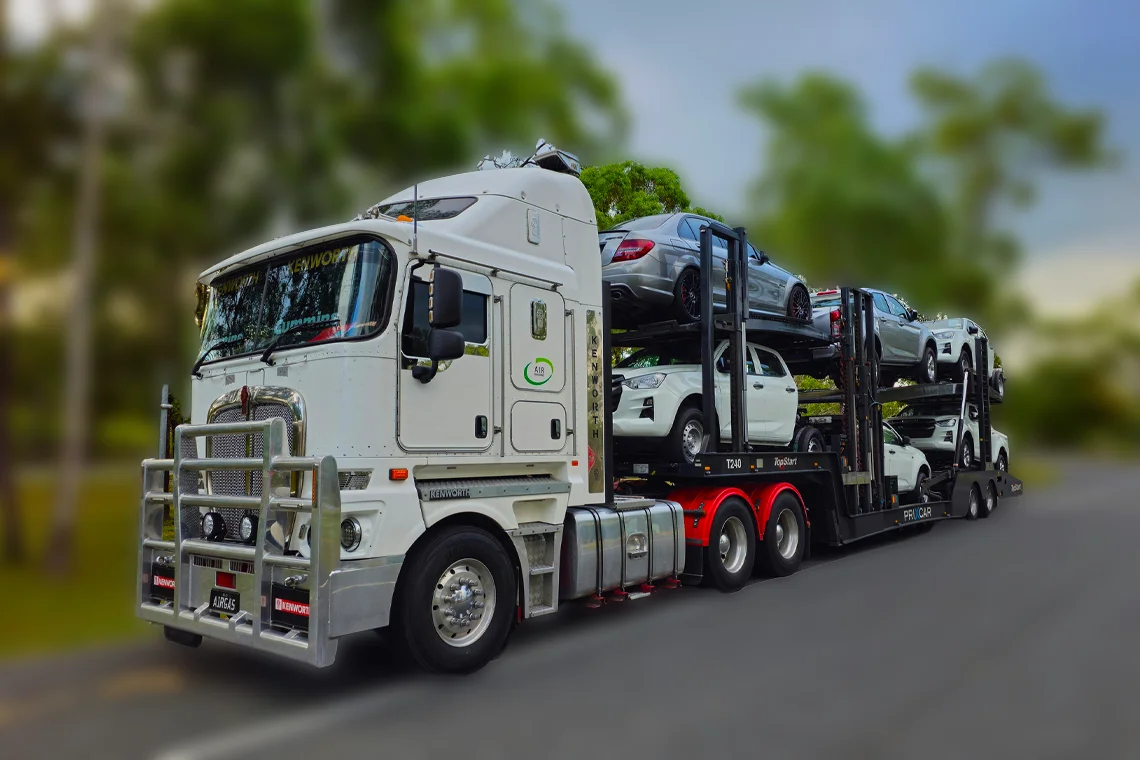
Fraudsters are everywhere, including the auto transport business, but industry experts are helping dealers and auctions protect themselves.
Critical Shifts:
-
Trust, but Physically Verify: A logistics firm’s vetting only works if you finish the job at the curb. Always verify that the driver’s license and the DOT number on the truck cabin match the info provided by your broker. Never accept "paper plates" as a valid identifier, as this physical check alone can stop roughly 95% of thefts.
-
The "Unknowing Accomplice" Trap: Fraudsters rarely show up themselves; they "hack and switch" by hiring legitimate, unsuspecting carriers to pick up your cars. Because these drivers have no idea they are committing a theft, they will appear professional and hurried—don't let their professionalism talk you out of following your security protocols.
-
Watch for "Big Data" Red Flags: Use carrier scorecards and platform tools to look for "signatures" of fraud. Be wary of carriers who have only one truck registered to their DOT number but are claiming multiple shipments, or those who have frequent address changes and low ratings on industry load boards.
-
Tighten the "Pickup" Hand-off: The moment of pickup is your greatest area of vulnerability because the employee handing over the keys often assumes the transaction is legitimate. Ensure your team never releases a vehicle without a pre-confirmed release document and a direct call to the shipper or broker if anything feels "off."
_________________________________________________
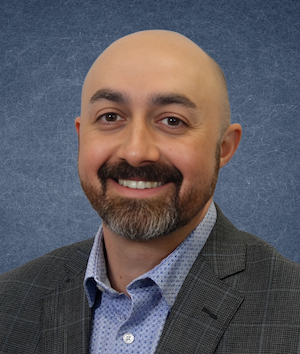
Jeremy Louisos, co-founder/senior vice president of Preowned Auto Logistics (PAL), based in Peabody, Mass., served on a panel about transport fraud during the recent Spring Remarketing Exchange in Texas. His company focuses on nationwide auto shipping for dealers, fleets, private parties and digital auctions. On the panel, Louisos wanted to bring awareness to the issue and offer a framework on what’s happening.
There’s some main attack vectors and some main prevention methods, he said. One the main attack methods is what Louisos calls the “hack and switch,” where the fraudster use phishing attacks to hack a shipping board, pose as gig carrier to redirect an unassuming carrier to a different location they choose. They might even target a particular vehicle, post it and get an unassuming carrier to go and commit the theft.
“They’re never going in themselves,” Louisos said. “They’re always subcontracting it out to somebody else by hacking and posing as a gig carrier.”
Lainey Sibble, head of Central Dispatch, said that fraudsters will challenge every weakness in the system. “There are so many handoffs when we’re talking about shipping a vehicle,” Sibble said.
Transporting involves the shipper, the logistics firm, the carrier and the dealership. Each part of the process is a potential open door. Even the initial pickup location offers crooks an opportunity, whether it’s an auction, dealership or repo lot. Fraudsters also use pickup deception, where a carrier comes to a lot, says he’s there to pick up a vehicle and the employee lets him do it because he assumes a car is being shipped.
“There are different areas of vulnerability that bad actors attempt to exploit,” Sibble said, “and one of those is at pickup, because that pickup location is not a party to the transportation transaction in most cases.”
Sophisticated fraudster’s are scraping load boards, dealer sites and the Internet to see when a vehicle is moving from one place to another, Louisos said. Using that info, that might forge a release document, hire an unknowing carrier – and paying him well- –who presents it to the dealership to pick up a vehicle.
“That carrier does not know they are committing a theft,” Louisos said. “Then (the fraudster) contacts the shipper, tells them he wants them to deliver to a different place and the shipper does it.”
Fraudsters also use double-brokering against the transport business. If a logistics firm contracts with someone, and they subcontract it out, the logistics firm doesn’t know who’s shipping the vehicle. Sibble said it’s hard to pick out one area of danger.
“To combat fraud, we focus on the three Vs; vetting, verification and vigilance,” Louisos said. “It’s our responsibility make sure we have pristine carrier networks. We’re monitoring insurance, FMCSA (Federal Motor Carrier Safety Administration) records and safety scores. We’re looking for criminal activity.”
Big data signatures, where a carrier has only one truck registered to their Department of Transportation number but they’re doing multiple shipments at a time or they have multiple address changes, bad driver’s licenses, etc. Central Dispatch promises strong platform security, vetting all companies and all users before they get on the platform, Sibble said. The company monitors the behavior on the site and provides customers tools to help them determine the right people to work with.
For a dealer shipping the vehicle, one tool is key. “We provide a carrier scorecard so that shippers can look at the credentials, performance and key attributes to determine if that’s the right carrier for them,” Sibble said.
For example, a shipper needs to move a car across the country, but a carrier might only be authorized to move cars within a certain state, she said.
Louisos said another step, verification, was something he emphasized to the audience at SRE. A logistics firm can do all the vetting in the world, but if a dealer doesn’t check the carrier’s driver’s license or the truck’s DOT number, then everything a logistics firm does breaks down, he said.
“Making sure you’re verifying that the carrier picking up the car is the exact driver and exact truck that was sent by your shipping provider is such an important step,” Louisos said. “It’s not a magic bullet and doesn’t stop every theft, but it’s such an important layer it will stop about 95% of what we see. If something feels off, it probably is off.”
Central Dispatch offers a tool allowing the carrier to assign a driver, so that pickup location can verify if this is the correct driver, Sibble said.
“The pickup location also plays a big role in this,” she said. “They have to decide is this the right driver to hand over the keys to the vehicle.
The shipper should provide information to the pickup location about who is coming and when. Companies like Central Dispatch can offer protocols to help shippers do that, Sibble said.
Louisos urged independent dealers to check driver’s licenses, check the DOT numbers on the cabin of the carriers – paper plates don’t count. “If something feels wrong, reach out to us and we’ll walk you through it,” he said.
For vigilance, using something like driver’s licenses is a good tool, or even using sophisticated tools like blockchain ledgers. Louisos said while his focus is on dealers, auctions could benefit from these tools, too.
 Central Dispatch is now working on a secure vehicle transfer solution to make sure the person and carrier company is who should be picking up the vehicle. “It’s really about just about adopting and using them,” Sibble said. “It’s no longer about access or do they exist.”
Central Dispatch makes sure people has their own login and password, as well as the right permission level. Don’t share passwords and don’t blindly click on links. Check to see how long a carrier has been in business and on the platform. What are their ratings?
Sibble said dealers not only should check the insurance of a carrier but ask to be added on that insurance for added protection. Also, as the pickup location, if there is any doubt or concern, call the shipper, Sibble said.
“Embrace the new technology,” she added. “Some of these steps are going to add a little time but they are worth it. They are going to save headaches and losses down the road.
Auto theft in the shipping space has always been a thing. But after a big uptick in recent years the top 25 brokers in the country formed a council to find out why, Louisos said. The discovered that organized crime had moved into auto transport theft business.
“It’s safer to steal cars than to move drugs and penalties are less” he said. “They’re targeting high value vehicles, typically $125,000+, but we’ve seen as low as $80,000 being targeted in some cases. But typically it’s G-Wagons, McLarens – makes and models like that.”
“Predominantly, we’re seeing this is in the Tri-state area of New York, Pennsylvania and New Jersey, as well as and Pennsylvania, but also Texas and Southern California,” he said. “These are places where once a. vehicle is stolen, it can either get put into a storage container and brought to a port or across the value.
“But typically, their targeting high value and trying to get them out of the country pretty quickly.
The good news for independent dealers is there are a lot of tools to help safely ship or receive vehicles, Sibble said. “We have seen a recognition from everyone across the industry that everyone needs to play a role in addressing fraud, ensuring that those in the industry can continue to shop vehicles safely and securely,” she said.