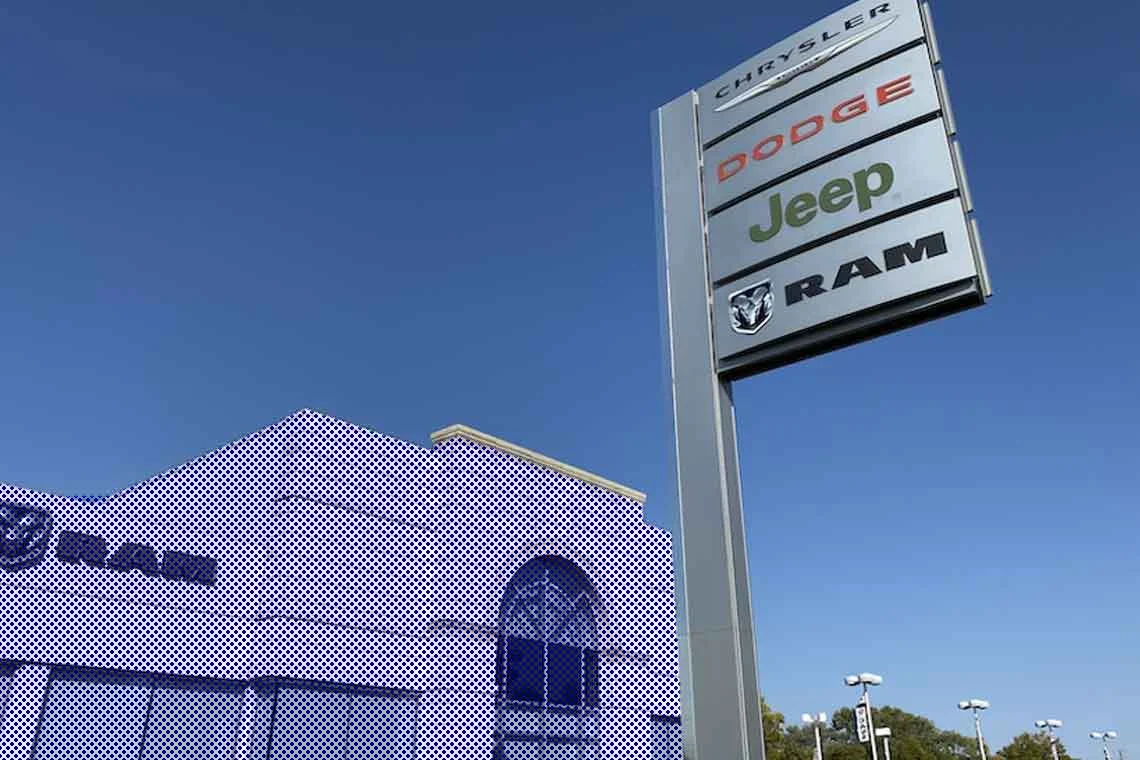
Stellantis is putting the brakes on its new dealer marketing program after just six weeks, following pushback from retailers over rules governing vehicle pricing, websites and digital advertising. The automaker notified U.S. dealers Nov. 13 that it was pausing its Marketing Covenant, which took effect Oct. 1 and introduced a new set of requirements for Chrysler, Dodge, Jeep and Ram dealerships.
In a statement sent to dealers, Stellantis said the program's complexity had created challenges and results had not consistently met expectations.
"After reviewing dealer feedback and market performance, we have decided to pause the current program while we develop a simpler, more effective approach for the future," the company said.
Stellantis added that its goal of strengthening dealer marketing investment and driving customer demand remains unchanged.
What the Marketing Covenant Required
The Marketing Covenant combined several existing dealer marketing and compliance programs into a single framework.
Among its requirements were new rules for advertised vehicle pricing, certified dealership websites, digital advertising providers and online competition between retailers. Under the pricing formula, advertised prices had to begin with MSRP, account for dealer-installed accessories and fees, and then subtract dealer discounts and generally available incentives.
The program also restricted dealers from bidding on other Stellantis dealerships' names in paid-search advertising campaigns.
Dealers were required to use certified website and digital retailing providers to qualify for certain marketing reimbursements. The program also included data-sharing agreements and a strike-based enforcement system. Repeated violations could result in chargebacks, the loss of Tier 1 leads, inventory syndication and Dealer Locate placement.
Some retailers supported the effort to create more consistent pricing and reduce misleading online advertising. Others questioned whether the restrictions would limit their ability to compete, manage inventory and respond to changing market conditions.
Dealers Raised Concerns About Flexibility
Matt Bowers, CEO of Matt Bowers Auto Group, which operates three Stellantis dealerships, said the program's timing and complexity made it difficult to work with.
Bowers told Car Dealership Guy that the restrictions affected decisions involving underperforming dealerships, including how quickly a store could rebuild sales and how much inventory he was willing to purchase.
The program also created concerns about how dealers could compete online when their pricing and advertising options were limited.
Nick Chivinski, vice president of sales and strategy at SavvyDealer, said dealers had raised concerns about the program's complexity from the beginning. He said a simpler approach that allows dealers to evaluate marketing partners based on results could benefit both retailers and Stellantis.
A Broader Shift at Stellantis
The decision to pause the Marketing Covenant came one day after Stellantis announced changes to its U.S. commercial leadership.
On Nov. 12, the automaker named Tim Kuniskis U.S. chief commercial officer, expanding his responsibilities to include retail and fleet sales and the dealer network. Michael Orange, Stellantis' senior vice president of U.S. sales and network performance, also departed the company.
The leadership changes and marketing program suspension come as Stellantis works to simplify its U.S. commercial operations and strengthen relationships with its dealer network. For now, the automaker has not provided a timeline for a replacement program or clarified what happens to violations, strikes or reimbursement decisions under the previous rules.
Dealers will be watching for further guidance on advertising requirements, approved technology providers and marketing reimbursements as Stellantis develops its next approach.