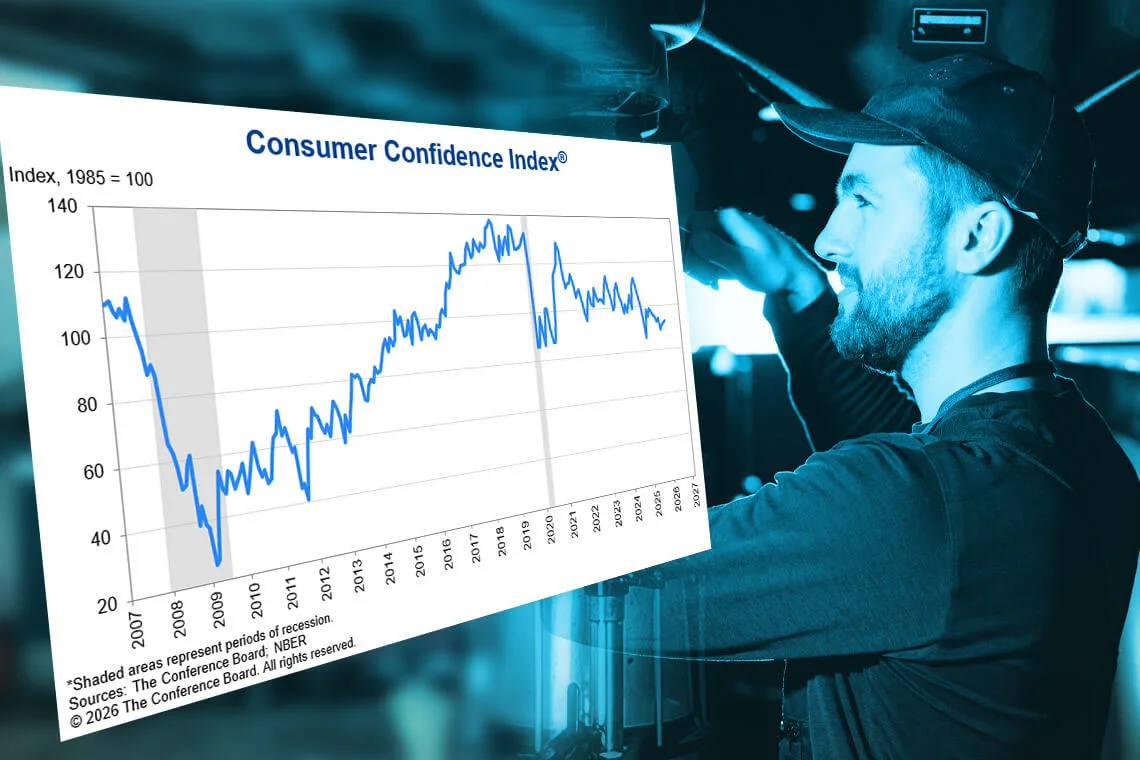
The Conference Board Consumer Confidence Index edged up by 0.6 points to 92.8 (1985=100) in April, from 92.2 in March’s upwardly revised reading. The Present Situation Index – based on consumers’ assessment of current business and labor market conditions – retreated by 0.3 points to 123.8. The Expectations Index – based on consumers’ short-term outlook for income, business, and labor market conditions – rose by 1.2 points to 72.2. The survey period for this month’s preliminary results was April 1–22, a period that included the temporary two-week ceasefire in the Middle East conflict beginning April 8 and the subsequent rebound in US equities.
“Consumer confidence edged up in April but was overall little changed, despite material concern about rising gasoline prices as the war in the Middle East prompted a surge in Brent crude oil prices,” said Dana M Peterson, chief economist, The Conference Board. “Consumer appraisals of current and expected business conditions declined moderately compared to last month. This was offset by modest improvements in consumers’ perceptions of the labor market, both current and expected, as well as income expectations, which were slightly more optimistic in April.”
The Present Situation Index cooled slightly in April, as net views of current business conditions (the share saying conditions are “good” versus “bad”) fell by 1.8 ppts to +4.1%. Perceptions of employment conditions improved slightly, with the labor market differential – the share of consumers saying jobs are “plentiful” minus the share saying jobs are “hard to get” – ticking up by 1.4 ppts to +7.5%. The Expectations Index increased by 1.2 points in April, as two of its three components – net perceptions of labor market and household income conditions six months from now – edged up. Expected business conditions were slightly more pessimistic.
Among demographic groups, confidence continued to trend downward on a six-month moving average basis for consumers aged 35 and up while younger consumers were a tad more confident in April. Respondents under 35 remained the most optimistic and those 55 and over the least.