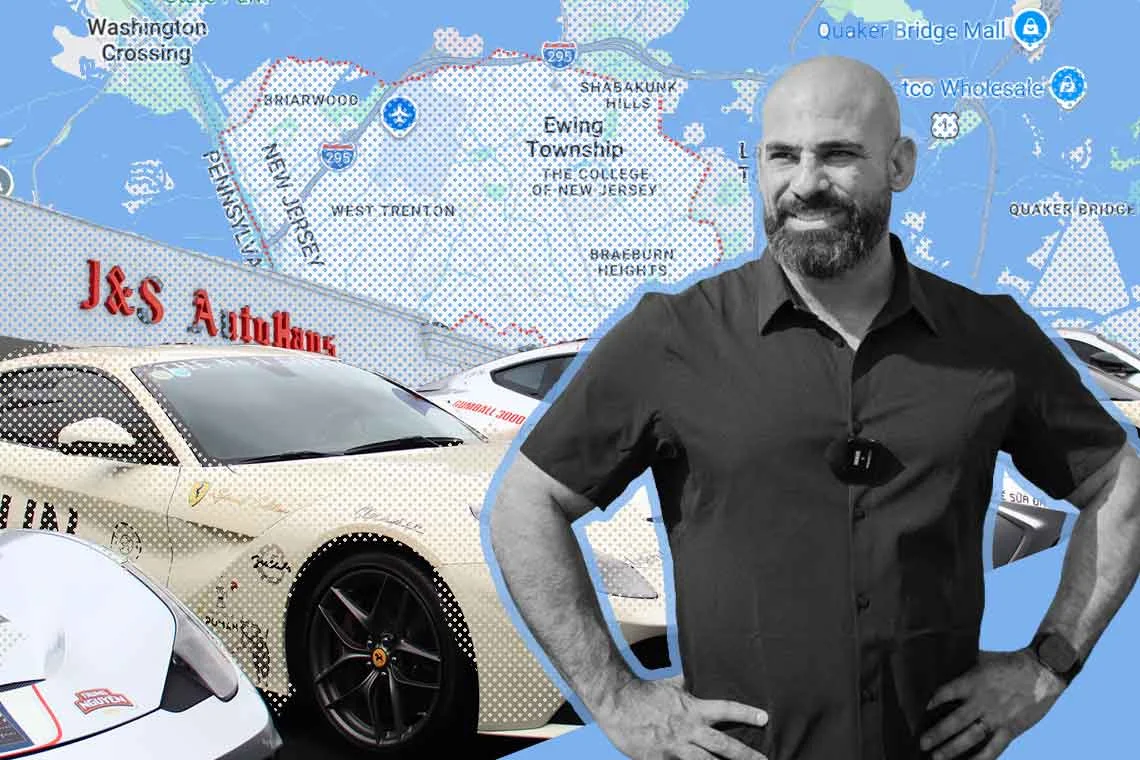
J&S Autohaus shows how SM can help dealers sell cars and put business disputes in the public eye.
For independent dealers, finding inventory often means building relationships, working auctions and competing for vehicles wherever they can be found. George J. Saliba of J&S Autohaus in Ewing, New Jersey, has added another tool to that mix: social media. Videos showing him buying cars have attracted potential sellers and helped expand the dealership’s inventory. But when a BMW purchased from another dealer was seized by police after reportedly being identified as stolen, Saliba used those same platforms to press for reimbursement, turning a private business dispute into a public confrontation.
A family dealership finds a new way to buy cars
J&S Autohaus opened in January 1995, when Saliba’s father, Jean, and uncle, Souheil, started an import-car dealership in Ewing. Saliba later joined the family business, which expanded into luxury vehicles, exotic cars and Teslas.
Like many independent dealers, J&S has sourced vehicles through wholesale auctions. Social media gave the dealership another way to reach people who might have a vehicle to sell.
One TikTok video featuring Saliba negotiating to buy a Tesla Model Y reportedly generated about 3 million views. According to the dealership, the video produced 25 seller leads and helped J&S acquire 10 additional Teslas. Those figures illustrate the potential value of putting the buying process in front of a large audience.
Instead of waiting for sellers to find the dealership, J&S could show them what it buys and invite them to make contact.
Taking the buying operation nationwide
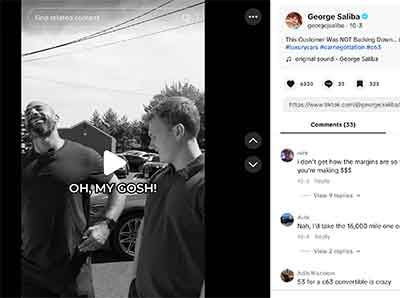 J&S reports more than 3 million followers across its social media platforms including YouTube and TikTok, giving it a potential audience well beyond its New Jersey market.
In September 2026, the business announced a nationwide buying service focused on luxury and exotic vehicles. Sellers can submit vehicle information online and receive an offer, with enclosed transportation potentially available. The dealership also says it can work with vehicles that have outstanding loans or leases when the numbers make sense.
The approach gives J&S a way to pursue inventory outside its immediate area without relying exclusively on traditional wholesale channels. Social media can introduce the dealership to sellers who might never otherwise have considered contacting it.
But a larger audience can also bring attention when a transaction goes wrong.
When a BMW deal went wrong
In February 2026, Saliba went public with a dispute involving a BMW X6 that J&S had purchased from Prime Motors LLC, a Virginia dealership. Saliba said police seized the BMW after it was identified as stolen.
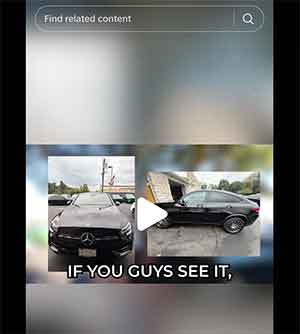 He sought reimbursement from the seller and began posting videos about the transaction, tagging Prime Motors and asking viewers to put pressure on the dealership. One video had attracted more than 673,000 views by the time Motor1 reported on the dispute.
The videos brought widespread attention to Saliba’s account, but they did not establish what Prime Motors knew about the BMW or how the vehicle entered the transaction. A vehicle later identified as stolen does not, by itself, establish that the dealer who sold it knew it was stolen.
By June, the dispute had moved beyond online posts. Saliba filmed himself confronting representatives of Prime Motors, and footage of the exchange circulated on YouTube and TikTok. In the video, Saliba demanded that the dealership refund J&S Autohaus for the BMW, while a representative maintained that Prime Motors had also been victimized and needed more time to investigate.
The confrontation did not produce a publicly confirmed resolution. The video gave viewers a look at both sides’ positions, but it did not establish who was legally responsible for the loss or whether J&S recovered its money.
A bad check and a missing Mercedes
In a YouTube video posted October 11, Saliba told his online audience that J&S had released a black 2022 Mercedes-Benz GLC 300 Coupe after receiving what appeared to be a legitimate cashier’s check for about $35,000. He said the payment turned out to be fraudulent, leaving the dealership without the money or the vehicle.
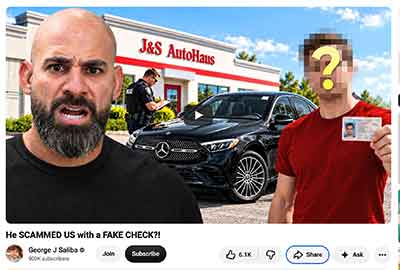 The Mercedes had been delivered to an address in Fairfax, Virginia, but Saliba suspected it might be a drop-off location rather than the buyer’s actual residence. He contacted a local connection in the area and asked viewers to watch for the vehicle, sharing identifying details to help locate it.
Rather than using social media only to explain what had happened, Saliba turned his audience into a potential search network. He walked viewers through his account of the transaction and the dealership’s efforts to find the Mercedes. The vehicle had not been recovered at the time of the video.
The business value and limits of social media
J&S’s experience offers three examples of social media’s role in an independent dealership. One video generated seller leads and helped the business acquire more Teslas. Videos about the BMW dispute brought public attention to a transaction that Saliba says left his dealership seeking reimbursement. Now, he is asking that same online audience to help locate a missing Mercedes.
For independent dealers, social media can do more than market vehicles to consumers. It can help source inventory, reach sellers outside the local market and mobilize people who might help when a vehicle goes missing.
But reach is not the same as resolution. Once a dispute goes public, a dealer has less control over how the story unfolds—and millions of views cannot guarantee a vehicle will be found or money recovered.