Critical Shifts:
-
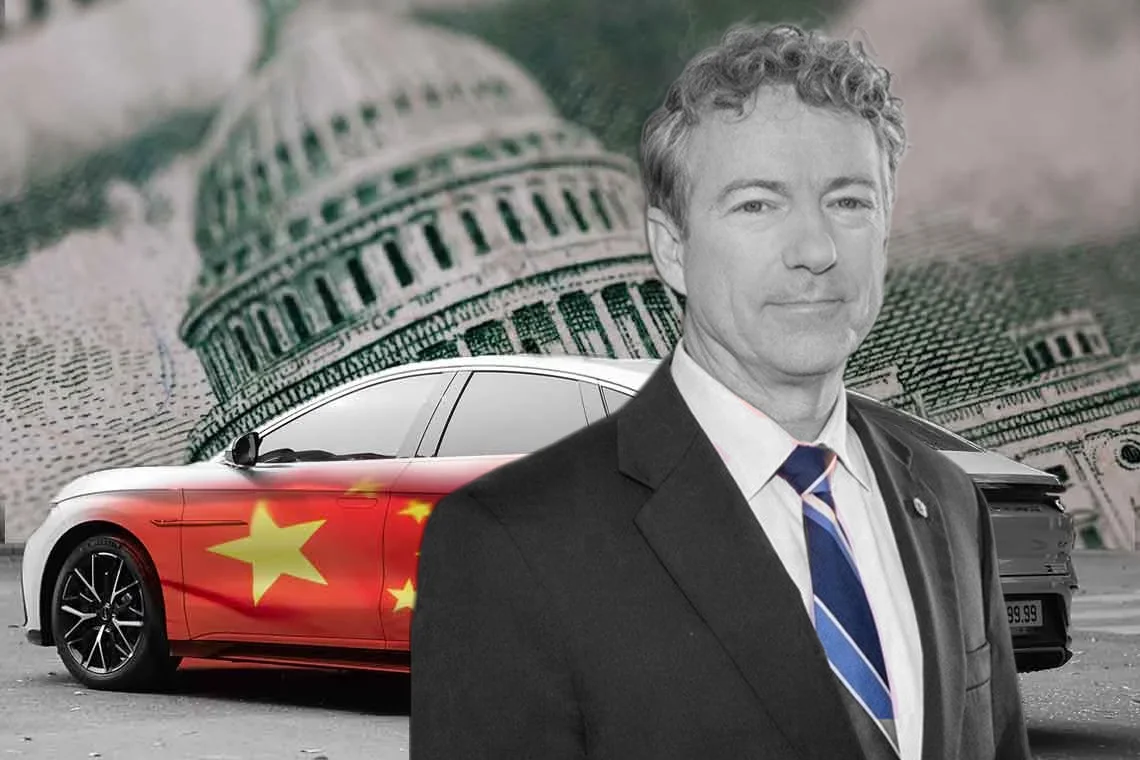
Bipartisan Ban Stalled: Sen. Rand Paul blocked a fast-track effort to pass the Connected Vehicle Security Act, which would make restrictions on Chinese vehicles permanent federal law.
-
Congress vs. Trump Strategy: Current rules and high tariffs heavily restrict Chinese connected vehicles, but President Trump expressed openness to Chinese automakers building cars in the U.S. if they hire American workers.
-
Market Uncertainty: The legislative standoff leaves automotive dealers and manufacturers unsure whether Chinese-owned companies will ever be permitted to set up U.S. production and sales networks.
_____________________________________________
Congress is trying to make existing restrictions on Chinese vehicles permanent, while Trump says he could welcome Chinese automakers that build in the U.S. A bipartisan effort to permanently block Chinese vehicles from the U.S. market has hit an unexpected roadblock: Sen. Rand Paul, R-Ky.
Sens. Bernie Moreno, R-Ohio, and Elissa Slotkin, D-Mich., planned to move the Connected Vehicle Security Act through the Senate last week using unanimous consent. That would have allowed the bill to move quickly without a formal vote.
But Paul raised objections, forcing the senators to postpone the effort while they try to address his concerns.
Paul has not publicly spelled out exactly what he objects to. He has indicated he will continue discussing the legislation with its sponsors. Because the Senate was attempting to use unanimous consent, one senator's objection was enough to stop the fast-track effort.
The U.S. already has a ban of sorts
The Biden administration finalized restrictions in January 2025 targeting connected-vehicle hardware and software linked to China and Russia. Beginning with Model Year 2027, the rules prohibit certain connected vehicles made by Chinese or Russian manufacturers from being sold in the U.S., including some vehicles manufactured here.
Chinese EVs also face tariffs of more than 100%, making direct imports economically difficult.
The legislation now moving through Congress isn't simply creating a new ban from scratch. It would put the restrictions into permanent federal law, making them harder for a future administration to change or reverse.
Then there's President Trump
That makes the timing interesting. President Trump said earlier this month that he would be open to Chinese automakers building cars in the United States, as long as they employ American workers.
“If China wanted to come in and open a plant to build their cars here, I’d be okay with that,” Trump said in a Fox News interview. He distinguished that from Chinese companies building vehicles in Mexico and shipping them into the U.S.
But under the existing Biden-era connected-vehicle rules, simply moving production to the United States doesn't necessarily solve the problem. The rules specifically cover certain vehicles from Chinese-connected manufacturers even when those vehicles are manufactured in the U.S.
That leaves Washington with an unusual collision of policies.
Congress is trying to permanently keep Chinese automakers out. Trump has said he could be open to Chinese automakers building here. And Sen. Rand Paul is currently preventing Congress from quickly locking the restrictions into law.
Bottom Line
For dealers, the issue could eventually become about whether a Chinese-owned automaker can establish a U.S. manufacturing operation and under what conditions its vehicles could reach American showrooms and used lots.